


The Problem with “Love Story”
Whenever Ryan Murphy’s hands touch a real-life tragedy, ready to transform it into a cinematic sequence, the audience is reluctant, as his approaches to such events take liberties that lean more toward sensationalizing stories than depicting them as they were. Love Story, focusing on the ill-fated marriage of Bessette-Kennedy, borders on transforming the tragedy of one of the most politically and culturally prolific families in the United States into a tableau vivant of thanatological chic. Time and again, we are reminded that our mythmaking impulses as a society prefer when our hapless icons are preserved in an atemporal stasis of the morbid sublime, rather than viewed as messy, flawed, once-existing human beings.
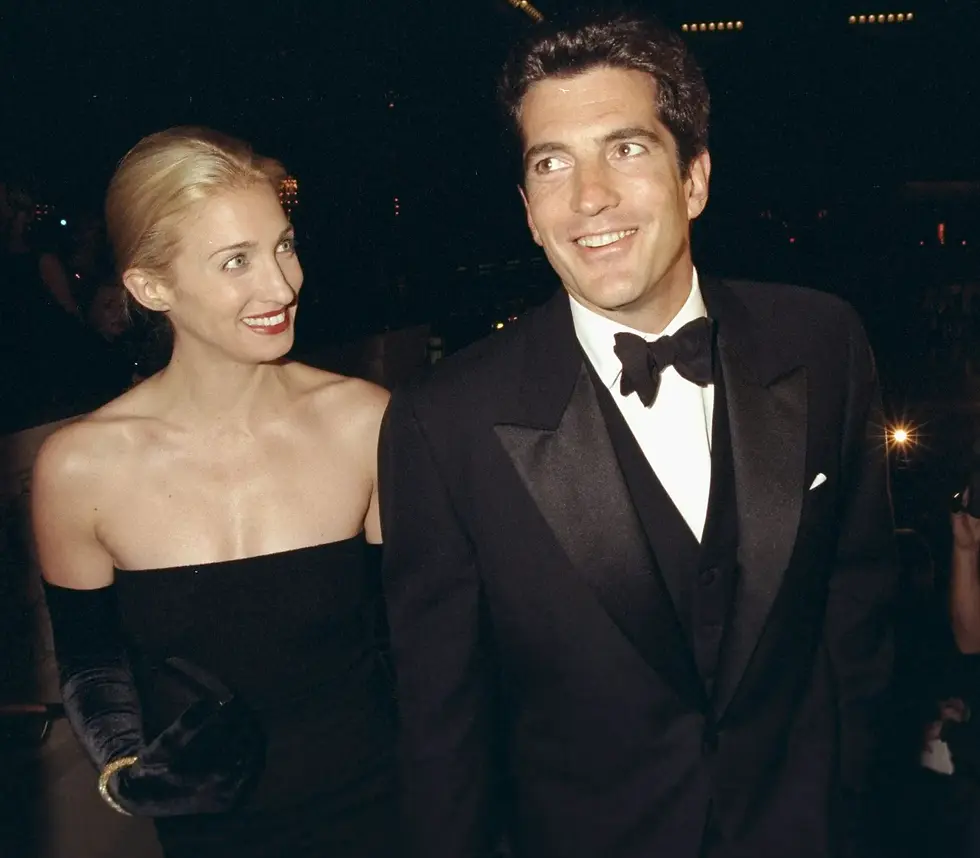
As we consume this retroactive romanticism on our screens, I suggest it is time to up the ante on a disturbing sociological truth: society’s fascination with the tragic deaths of the young and beautiful has little to do with the loss of life itself, and everything to do with it being a collective voyeurism for spectacle, disguised as mourning.
Admittedly, there is a ghoulish mythos embedded in dying at the zenith of one’s physical appeal and celebrity status. For John F. Kennedy Jr., the handsome and most sought-after man of the ’90s, and Carolyn Bessette, the chic and enigmatic publicist of Calvin Klein, their 1999 descent into the bleak waters of the Atlantic granted them a state of permanent iconic suspension. We still discuss how much John resembled his father, and Carolyn’s minimalist style and utter lack of jewelry remain hot topics for fashion magazines nearly three decades later. Because their deaths were so abrupt and early in their lives, they were spared the inevitable erosion of public interest; the drift into becoming “uncool” middle-aged figures, with awkward, “boomer” digital footprints. Instead, the “what-if” vacuum they left enables the public to perpetuate a narrative of transfigured luminaries, embodying a version of the American Dream that tragically, but beautifully, remains unfinished.
One of the most accurate descriptions of Carolyn’s traits on the show is her elusiveness and silence toward the press. Her refusal to grant interviews, to address the swarm of paparazzi camping outside her Tribeca apartment, turned her into a blank canvas. The hawk-like spectator (the public) projected their fantasies of who she was onto her, transforming her into an archetypical martyr of the paparazzi era, her insistent silence louder and more profitable for tabloids than any interview could ever have been. I would also call this the “Saint Diana archetype”. The late and beloved Princess of Wales is another ’90s victim of a culture relentless in surveillance and ravenous in its invasion of privacy, with an entitlement that could render anyone’s life (or death) a miserable spectacle. These women (Grace Kelly, Marilyn Monroe, Amy Winehouse, etc.) are the sacrificial innocent: society wants them beautiful, young, lost, and trapped, so their misery can be commodified. Carolyn’s mental breakdown in Central Park as she fought with John was photographed shamelessly, and so was the corpse of Princess Diana at her 1997 accident.

As of 2026, society’s insatiable appetite for tragicality and glorified sadness is more present than ever, whether in the art we consume, the aestheticized feeds on TikTok and Pinterest, or the nostalgia younger generations express toward figures they never grew up with but who have passed away. Love Story leans into this cliché, as expected from its Murphy-esque lens. Using high-end cinematography, a meticulously curated wardrobe, and beautiful protagonists, the series performs a filmic hagiography that polishes the edges of a volatile marriage and dissolves the complexities of these individuals into something smooth and visually coherent.
But this obsession with tragedy can be explained psychologically and sociologically. A percentage of people are what the Germans call “Schadenfreude”; they experience twisted satisfaction at the suffering of those who have fame, wealth, and beauty, people who, in the end, remain mere mortals. For others, the appeal lies in gossip: knowing the most shocking details allows participation in a larger conversation, attracting attention. Still others might imagine themselves, from the safety of home, facing a similar life-and-death situation. Whatever the reason, celebrity death remains a morose theatre that people flock to for entertainment, often denying the deceased dignity even in their passing.
Ultimately, the largest takeaway is that, due to parasocial relationships many have with famous figures, once these individuals pass (especially in shocking manners) it is rarely the loss of life that is mourned. Rather, it is the loss of a “vibe,” or the fabricated mythos surrounding them, which may bear little relation to their actual selves. In Love Story, despite the visual allure of Paul-Anthony Kelly’s rain-soaked body, the curation of the perfect ghost takes precedence over granting these people their final gift: the ability to be forgotten. To deny them that is to deny even post-mortem peace, instead transforming their deaths into a thriving market of morbid memorabilia.
If one considers it closely, these individuals are denied the right to exist outside an assigned narrative. In this light, the final act of cruelty is not the helicopter crashing off the coast of Martha’s Vineyard, but rather our making their deaths the most interesting thing about them.


Σχόλια