


Cineville: The Subscription Model Revitalizing Europe's Independent Cinemas

How do you transform going to the movies from an occasional night out into a way of life, while ensuring the sustainability of independent cinemas? The European answer is Cineville: a monthly subscription for unlimited screenings across a network of arthouse cinemas.
Samir Azrioual, Managing Director of Cineville, and Tobias de Jong, Founder and Managing Director of LAB111, a Cineville cinema network member, explain how the model works in practice and why it benefits both filmgoers and cinema owners. The conversations featured below have been edited for length and clarity.
The group of students who figured out how to bring audiences back to independent cinemas
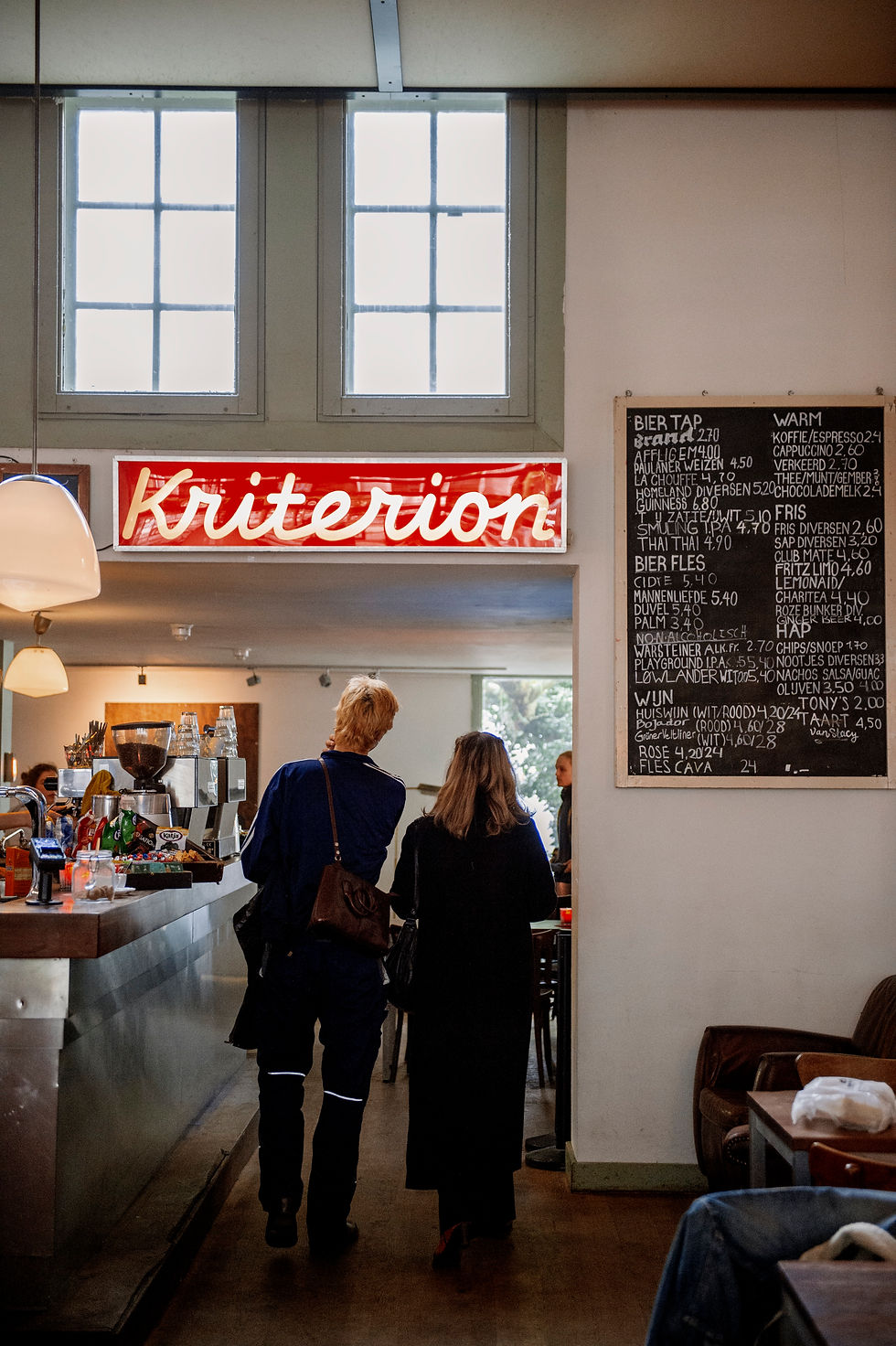
It’s 2008. At Kriterion, a historic student-run independent cinema, a group of friends and volunteers are searching for a way to bring viewers back to arthouse theaters like their own.
The major movie theater chains were attracting an ever-larger share of the audience, while younger viewers saw arthouse cinema as something irrelevant to them -something reserved only for a select few, the connoisseurs, and older audiences.
“In this cinema that was the birthplace of ideas for many people who love film and perhaps have an entrepreneurial mindset, and they just want to try new things and innovate, [the volunteers running it] were wondering: how is it that students manage to find the cinema’s bar, but never actually step into the screening rooms to see what’s playing?” Samir Azrioual, Managing Director of Cineville, tells me.
The group firmly believed that cinema has the power to bring people and ideas together. They realized that for independent cinema to survive against commercial giants, smaller venues needed to join forces and reintroduce arthouse film to the public.
A few months later, Cineville was born, initially code-named "Project David," symbolizing the survival of small independent theaters alongside the industry's Goliath-like chains. The venture launched as a network of 13 independent cinemas.
The Economic Model Behind Cineville
With a monthly membership fee of around €20, with a lower price for those under 30, members receive a physical card that gives them unlimited access to a wide network of participating independent cinemas. For comparison, the membership fee is usually equivalent to the price of around two regular cinema tickets. The card also offers discounts on special screenings, as well as free or reduced admission to festivals, retrospectives and panels.
Cineville is based on collective management. It operates as a shared network of cinemas in which the independent cinemas themselves jointly determine the monthly membership fee, market strategy, the admission of new cinemas and the payout per ticket. As the network grows, the amount redistributed to each cinema per ticket increases, reaching up to 90% of the average ticket price. The platform increases the visibility of smaller cinemas through joint marketing, while also providing the technological infrastructure for a membership model, as well as collecting and analysing data on audience habits.

As Samir explains, “When you buy a Cineville card, the money you pay goes to the collective of cinemas. Then we make a split: a small percentage goes towards [Cineville’s] operating costs, meaning marketing, software, etc. This cost varies slightly from country to country, but is around 10–20%. The rest is money that goes towards the cinemas’ revenues. What we see is that over time, because we are gaining more and more members, revenues increase and we are able to redistribute a larger amount per ticket.”
At the same time, Cineville’s expansion across borders is supported by the European Union’s Creative Europe MEDIA programme, while the Europa Cinemas network directly supports cinemas adopting the Cineville model in new countries.
The Movie Theater Perspective: Collaboration, Programming Freedom, and Full Theaters
The results of this model are impressive. According to internal Cineville data, five countries, more than 230 movie theaters, and over 118.000 subscribers are already participating; in 2025 alone, over 2.5 million tickets were sold, while Denmark and France are preparing to join the network. The most significant achievement, however, is the shift in audience behavior. In the Netherlands, for example, Cineville managed to boost the average annual attendance per viewer from 1.6 to 25 visits, with young people making up the majority of the audience.

To understand Cineville’s contribution to independent cinemas, I spoke with Tobias de Jong, founder and Managing Director of the cinema LAB111 in Amsterdam. His experience confirms the power of the network.
I asked him if and to what extent Cineville brings more viewers to the theaters. According to internal LAB111 data, around 70% of its audience now comes from Cineville. However, as Tobias explains, the success is shared by both. “As a movie theater, our approach is to convince you to watch more diverse films. Cineville helps in this regard because people are more likely to ‘take a chance’ if they know they can watch something that sounds interesting, it’s “free”, and they can walk out anyway if they want to, which they rarely do.”

This steady number of cinema-goers gave the cinemas more freedom to take risks with their programming and evolve into a multifaceted gathering place. “When we started out, we became quite known by doing way more repertory programs, way more focus on classics, and contextualizing [the films]. We don't show everything, but as we grew, we began including new releases as well. You can see both new films and classics under one roof,” says Tobias.

At the same time, Cineville offers a degree of financial stability even during periods of widespread market decline. As Tobias notes, the network’s independent theaters in the Netherlands are showing steady growth, even when overall theater attendance is decreased. And despite the fact that revenue per ticket is slightly lower than the standard price, the big increase in the number of visitors and frequency of audience visits makes up for the difference.
For Tobias, one of Cineville’s most important strengths is its respect for the identity of each member cinema and its ability to transform competition into collaboration. “You become part of a collective that protects the character of each cinema. You continue to develop your own identity to stand out, but through Cineville, you collaborate with your competitors toward a common goal. I couldn’t imagine running a cinema without Cineville.”

This ongoing dialogue allows the network and the public to embrace venues with completely different profiles. “There are still differences even among arthouse cinemas in the Netherlands. You have the subsidized cinemas, student-run venues, those that originated from squatter communities. Cineville does a great job in communicating with everyone and figuring out how to meet different needs. [...]. All these different elements come together because we all share the same interest. We understand each other.”
The economic impact of Cineville extends beyond the sustainability of the theaters themselves and permeates the entire film ecosystem. By building a loyal audience open to experimentation with a diverse film repertoire, the model creates demand for the distribution of films by smaller, independent producers.
As Samir points out, according to internal Cineville data, there are “instances where Cineville members made over 50% of admissions for specific smaller films.”
Membership as an aspirational purchase towards a different lifestyle
The Cineville card has become a symbol of identity and belonging to a community with its own values. “One of the reasons people have a Cineville card isn’t just to see the movies they’d planned to watch, but because they want to challenge themselves to see something different, or to support their local cinema. Even when attendance dropped, such as during the pandemic when theaters were closed, over 80% of subscribers remained members, according to internal Cineville data. There was no benefit for them beyond supporting the local cinemas.”
As Samir points out, having a Cineville card makes you part of this community of movie lovers. For example, there are people who include their Cineville card in their profiles on dating apps because they feel it says something about them and they want to find a partner with similar interests.
When asked if and why going to the movies will prevail over streaming, the answer was that in an era dominated by generic franchises and solitary viewing on the couch, often accompanied by the inevitable use of a cell phone, the movie theater becomes a space for authentic, shared social experiences.
“Time has become more valuable, and people are reappreciating the cinema experience. And that means you don’t just want to sit on the couch and watch Netflix while playing with your phone. You want to be in the moment,” says Samir. “You’ll see a counter-movement of people who want to be surprised. And that attitude belongs to arthouse cinema, where you never know exactly what you're gonna find yourself into.”
According to Tobias, the subscription serves as an aspirational purchase towards a different lifestyle: to want to see more films, but also, for instance, the desire to cut down on screen time, go out in the middle of the week, and become part of the society in a new city. The financial aspect is merely the rational justification; the real motivation is human connection, whether it’s making new friends or having an excuse to see your sister at the movies more often.

Cultivating the habit of going to the movies benefits us all
Could such a model be replicated in other markets, like Greece, for example? Samir’s answer is straightforward: “I think that Greece definitely has the capacity to set up a Cineville-like model if we study the right parameters”.
As he explains, expanding the network into new countries is a matter of local initiative. A prerequisite is the formation of a collective of movie theaters that decide to collaborate and implement the collective management model. At the same time, he emphasizes that the transition requires effort. “In the first one to three years, it's actually quite a challenge for cinemas to be part of the founding members. But after that, you see everything going up, and then you see the fruits of your labor as a local Cineville organization.”
For Tobias, bringing independent cinemas into a collective is perhaps an essential step for their future. “Of course, for some cinemas it might not be necessary. But if it’s set up properly at the local level, with a [harmonious] collaboration between different factors and stakeholders, I think it can work in any country. [...] It fosters a culture of going to the movies. And even though, perhaps at first, people won’t come directly to your cinema, the overall cultivation of the habit of going to the movies ultimately benefits us all.”

Comments